Winter ascent of Cherni vrh via Stenata - how I underestimated Vitosha
The winter ascent of Cherni vrh (2290 m) from the Aleko hut via the ski run "Stenata" is one of the most easily accessible winter hikes. This is an account of our first ascent - what we saw and what you need to know if you are going up in winter.
What is Cerny Peak and why did we underestimate it
Cherny Peak is the highest point on Vitosha, but the figure people miss is another: the average annual wind speed here is 9.3 m/s, making it the second windiest peak in the country after Murgash in the Balkan Mountains. the average January temperature at the summit is about -8 °C before the wind. With the constant wind it "feels like" it often drops below -20.
We were told by acquaintances and friends that it was just "a walk in the park, even in winter". I decided to go lightly dressed. For starters, I forgot my gloves and bandana in the car. On the way down my hands were almost blue. The video shows how they were in the pockets of my thin jacket for much of the hike - because at times I couldn't flex my fingers. Well, I figured it out the hard way.
The route: hut Aleko → the Wall → Cherni vrh → the gellons
The route is without options for deception: climb directly on the ski run "The Wall", which starts immediately south of the Aleko hut (it is not the standard ascent and descent on the gels), and descend on the standard summer route with the gels - the steel stakes that mark the trail over the bare ridge.
Parking and start from Hut Aleko
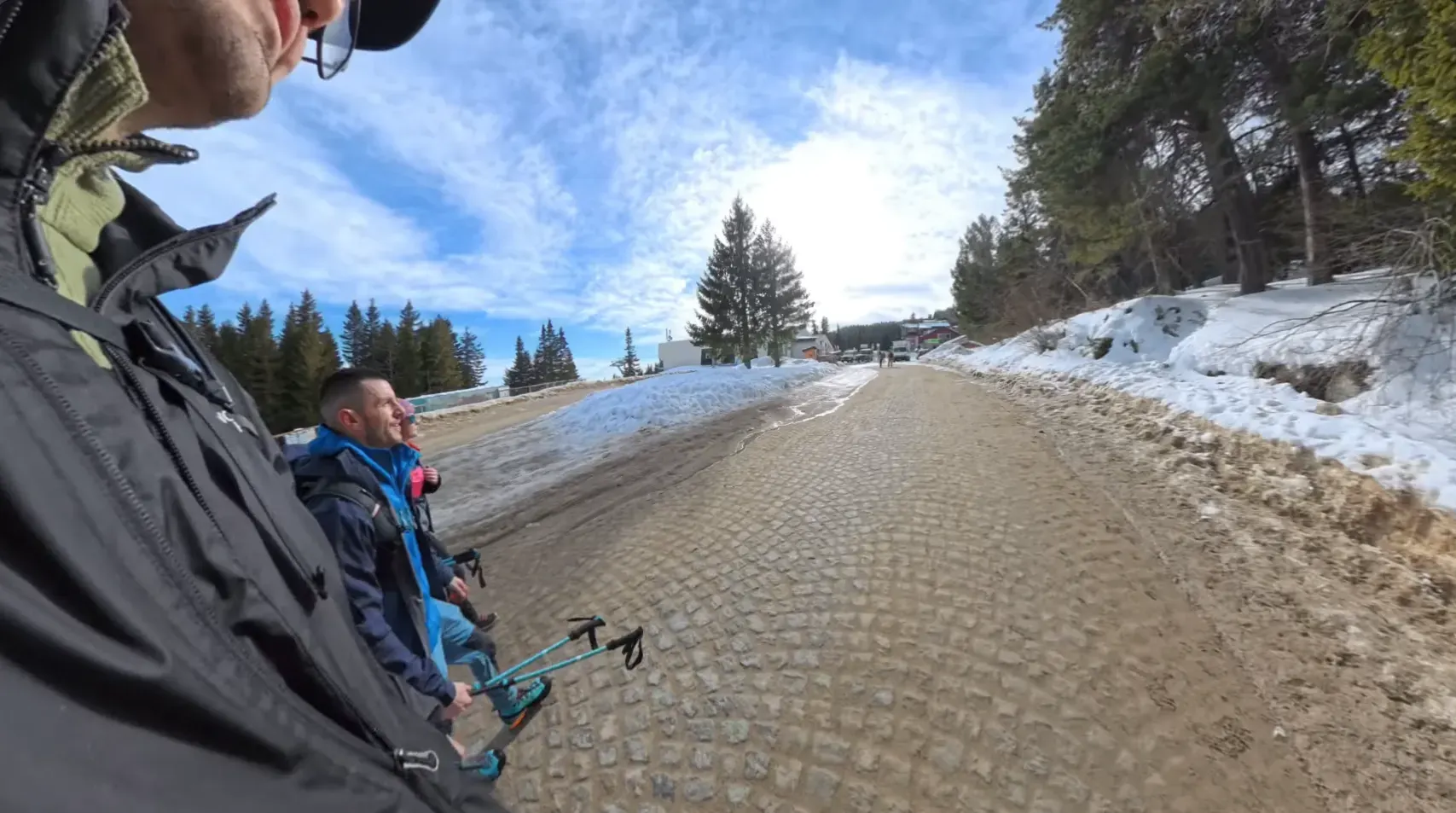
We arrived at 09:40 on Sunday.
On weekends and official holidays, access to Vitosha by car is prohibited from 10:00 to 15:00. The Sofia municipality closed the road from the district of Vitosha. The buses are allowed to run unhindered. The police pulled us over to park about 2 km before the hut - there were a bunch of cars parked along the road because it was Sunday.
We walked towards the Romanski lift. After about a kilometre we saw that there were free parking spaces further up - Steffo, who was with the car, came back, drove it further up and caught up with us so that we couldn't walk as much on the way back as we did on the way in.
If you don't have a car:Bus 66 leaves from the Zoo and goes directly to the Aleko hut from 15 February 2025 Before that the final stop was the Moreni Hotel. This update is not yet everywhere on websites and tourists miss it. You can click on "Itineraries" on the Sofia Traffic website and select line 66 because there is no direct link to share (they ruined it this country 😀 ).
Skiing the "The Wall" ski run
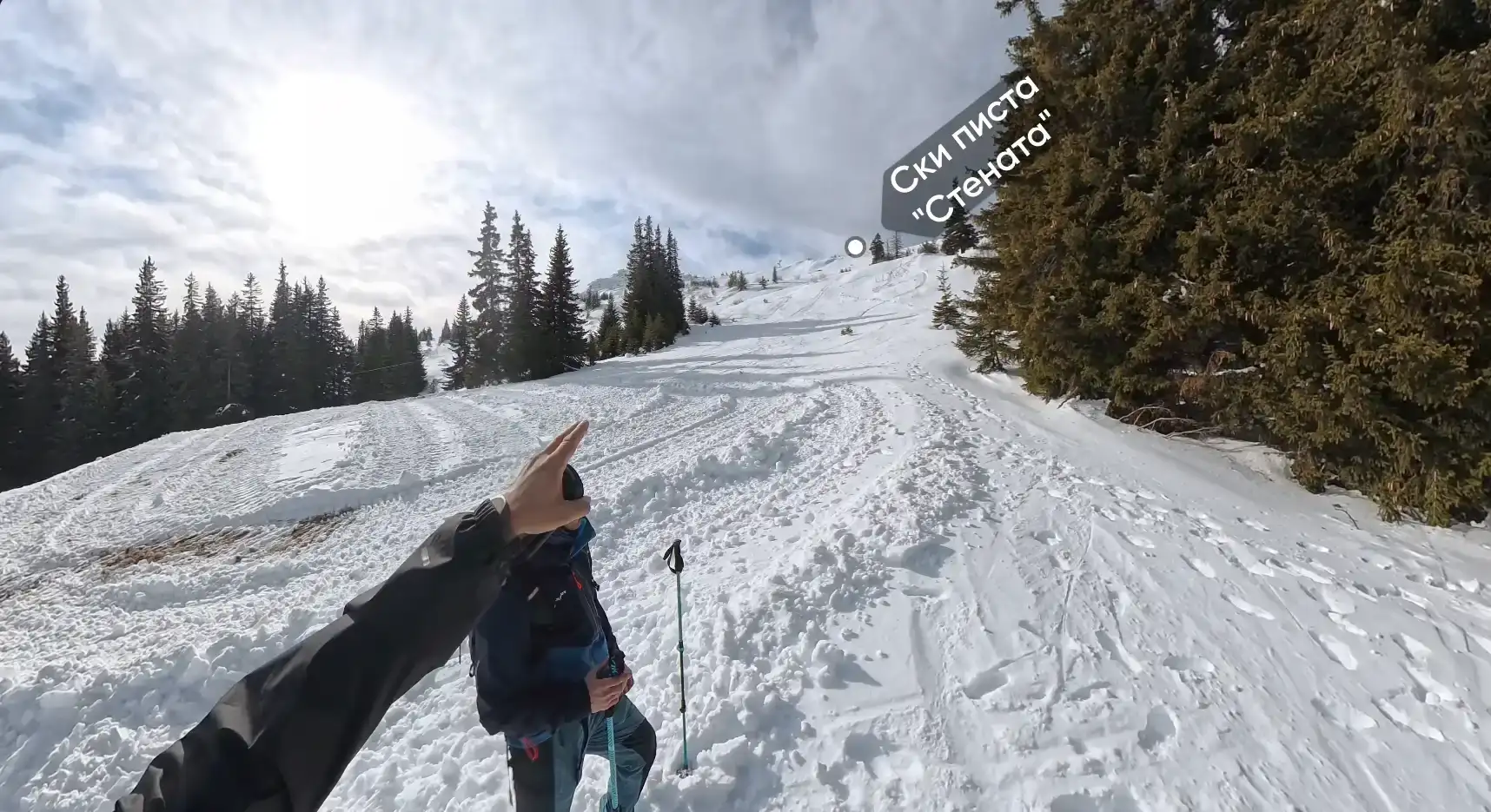
The Wall is a steep ski run and its vertical drop was felt a lot, we climbed almost 500 meters of vertical drop in a short time. From the Aleko hut we turned immediately right and started the climb. The snow was packed with skiers and snowboarders and it was going well, no need for crampons or snowshoes.
By 11:20 we were halfway up "The Wall". Up the slope it was slightly steeper and more open to the wind. If I had been comfortable in a windbreaker-type jacket up to this point, from here on up I began to feel that I hadn't put on enough base layers.
On the ridge: the numbered gels
Upper on the ridge, below the Big Slice, the landscape opens up and the trail follows a line of steel gels - numbered stakes placed every 20-25 meters. In Rila and Pirin there is rarely such a boon 😊. It is also visible in almost zero visibility - which is why they are there.
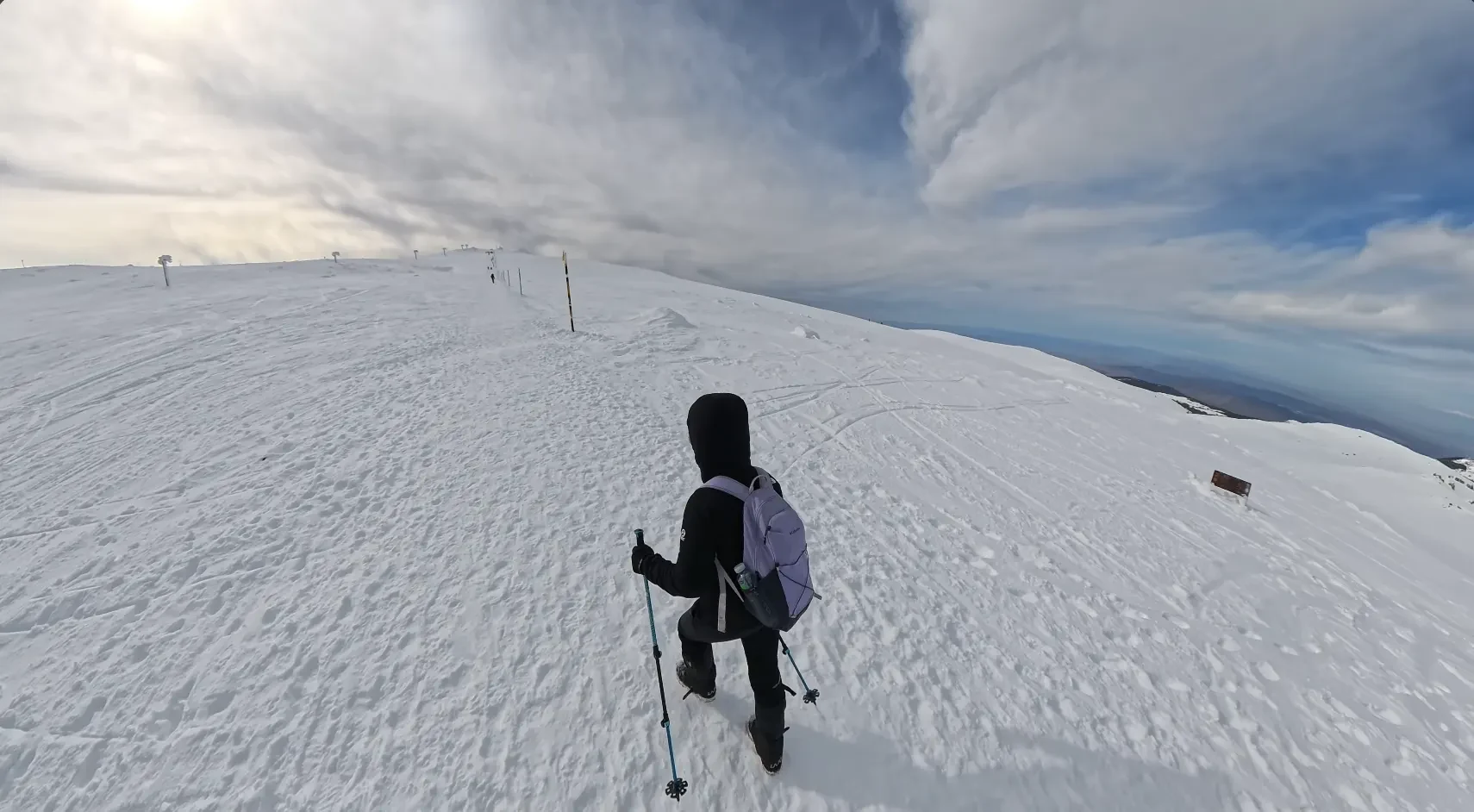
This was also where the wind became a problem. My hands were starting to freeze quickly. Steffo gave me a bandana to use as a scarf/balaclava (back when climbing the Wall) - and even so, I had to take my hands out of my pockets to shoot the video, which made the freezing worse (camera man never dies 😀 ).
Running to the summit (12:29)
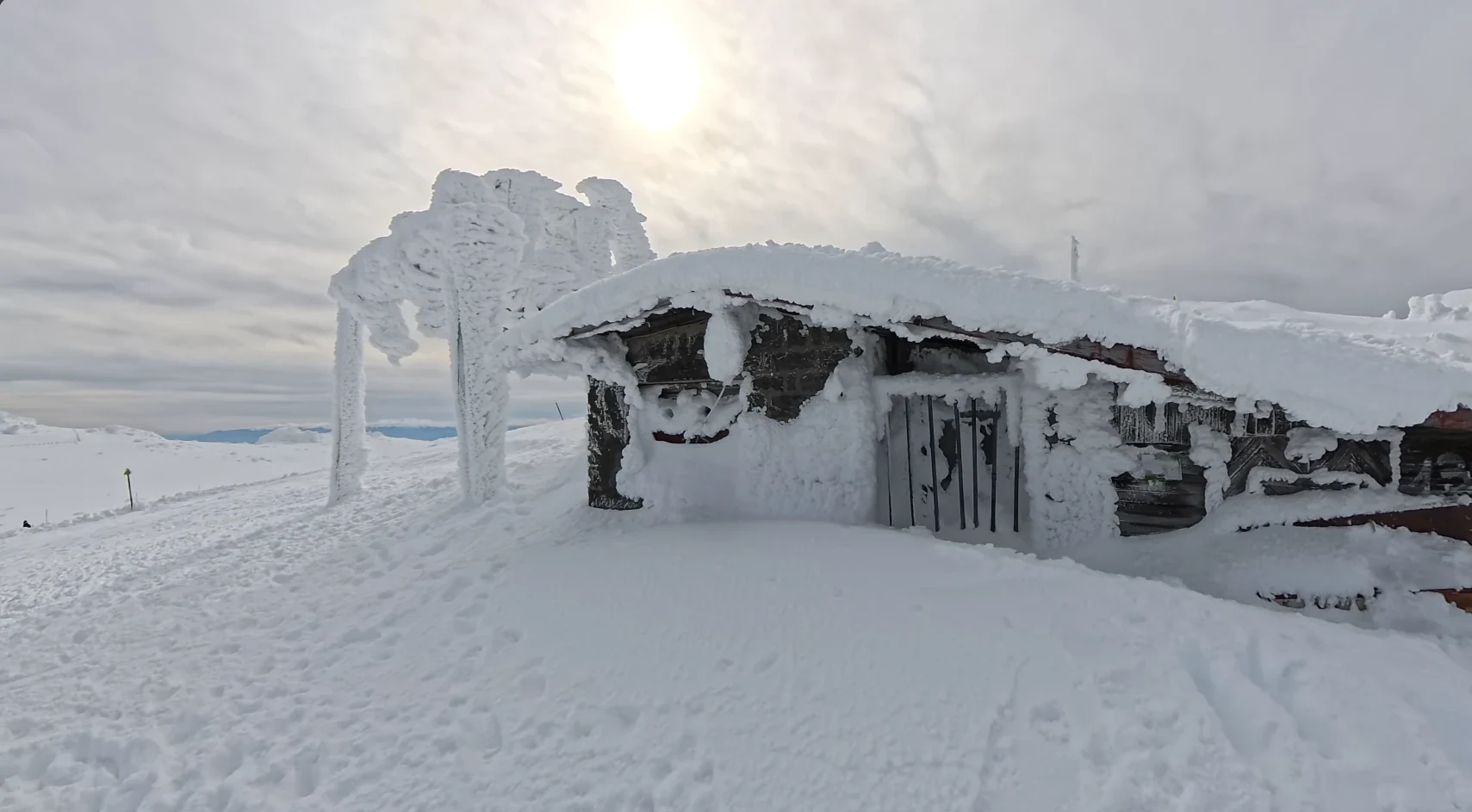
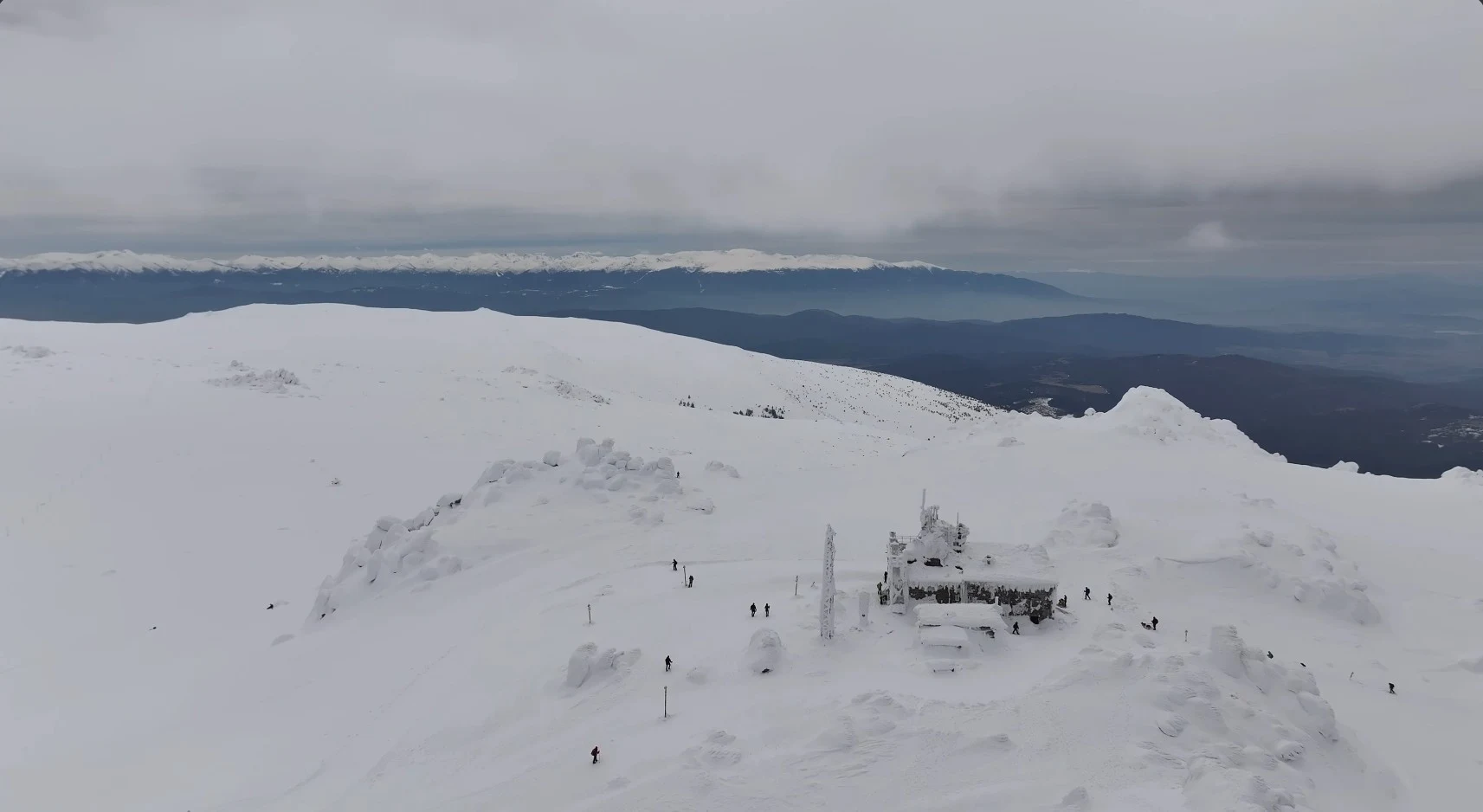
From start to summit - about 2 hrs 30 mins. At the top stood the weather station, the shelter and the 2290m sign with the famous bear. Stefo released the drone - the views of Rila were outstanding, you could see Musala and the ridge around it, Sofia also from under the clouds to the north.
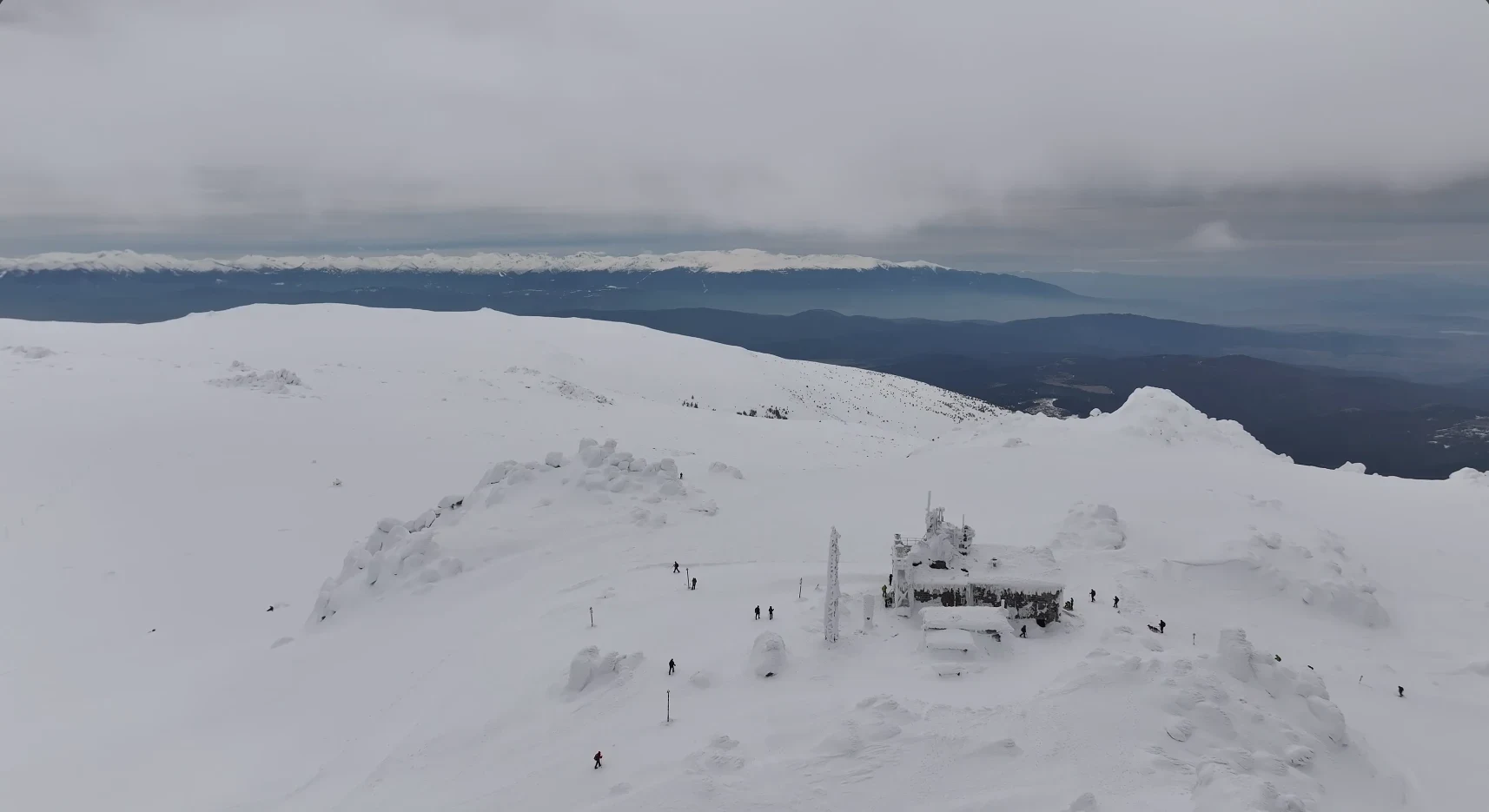
We tried to get into the shelter and but it was like in "Grandpa's Mitten" Full of tourists. I found half a square metre in the corner to warm my slightly frostbitten hands for five minutes while the others went to the shelter toilet. The shelter has a tea room with soups and alaminutti, but we didn't feel like going in because it was a hell of a rush - we ate what we brought and headed back.
Descending the Gels
Descending the standard route with the gels is easier than climbing the Wall - the gradient is more moderate and the trail is wider. In about 55 minutes we were back at the Aleko hut.
On the descent the wind picked up. My hands began to sweat again, and at times I stopped taking pictures to warm up in the pockets of my thin, unlined jacket. Steffo gave me his gloves and we took turns like that until we descended to the Aleko hut, where the wind died down.
The mistakes I made (and how to avoid them)
1. I went without gloves.
2. I underestimated the wind on the ridge.
3. I didn't bring a balaclava.
3. We should have left earlier, before 10 o'clock, to save the 30 min walk to the hut itself.
What to wear for this winter trek
Waterproof membrane boots (B1 category is sufficient)
Membrane jacket + extra insulation layer in backpack
Winter gloves + spare thin ones
Bag or bug + hat (warm)
Goggles (wind eddies at the summit kick up snow powder)
Thermos with hot drink - the tea room at the summit is small and often full
Fan or headlamp on longer treks, that don't end at Cherni vrh(winter day ends quickly)
Shoes are not usually needed on a beaten track. Pickel - also. But both have a place in your pack if the trail is icy or a blizzard has covered the markings.
Telephone Alerts and Safety
There is a Mountain Rescue Service (MSS) post at the summit. GSM coverage is relatively stable along the entire ridge.
Frequently Asked Questions
Is Cherni vrh difficult for beginners in winter?
For the vertical drop, no. The route is among the easiest winter first ascents in Bulgaria. The main risks are the wind and the low temperatures on the open ridge, not the technical requirements. A beginner in good shape with the right equipment can do it. A beginner without winter equipment - a firm NO.
What are the views from Cherni vrh?
In clear weather - outstanding. You can see Rila with Musala, Sofia and the Sofia field, Stara Planina from Kom to Botev, parts of Pirin, Sredna Gora, Osogovo. This is one of the most panoramic peaks in the country because of its central position.
Is there a teahouse and shelter on the summit?
Yes. There is a shelter with a small teahouse (soups, aluminuti, tea) and a PSS post on Cherni vrh. The weather station is still open. On busy winter days the shelter is crowded and you may not find a place to sit. There is a toilet.
Why is Cherni vrh so windy?
Vitosha is a dome mountain and Cherni vrh is at the top of that dome - there are no neighbouring peaks or ridges to cut through the air masses. An average annual wind speed of 9.3 m/s makes Cherni vrh the second windiest in Bulgaria. In practice, this means that even in "calm Sofia weather" there can be 40-60 km/h winds at the summit.
Conclusion
If you go to Cherni vrh in winter, look at it as you would Musala, without underestimating yourself.
We had a great time. The views were worth the mistakes. But next time I'll remember to check my pack before I get in the car. Especially the compartment with the gloves and bandana.
A new peak is coming soon. If this story helped you, subscribe to YouTube channel - we upload new winter routes every week.